


The Prestige


Good God this film is brilliant! The thing about The Prestige that makes it one of the most intelligently written films I have ever watched is not just on-brand 'Chris Nolan special' clever twists or structure, but because of how deeply every single layer of the film is so well tied together. This is a film about obsession, sacrifice, ego, desire, illusion, science, and storytelling itself. And somehow, despite all of that complexity, it remains incredibly easy to follow and emotionally engaging.
Watching this film genuinely inspired me creatively and made me instantly want to open up my script drafts and write write write!!! It made me want to direct. It reminded me how powerful tightly constructed storytelling can be when every scene, line, and image serves a purpose. And honestly, I think this might be Christopher Nolan at his most clever.Not his biggest. Not his most ambitious visually. But perhaps his smartest. This is a film that deserves multiple viewings. Even though you'll likely understand the layers of the film in the first watch, I can honestly say even with that, it gets better every time you watch it. You notice more details. This was my second time watching it. And even though I knew the truth, I found myself more mesmerised. I found myself laughing to myself at times every time I noticed another detail in which Chris Nolan is telling us what the 'trick' is. He is literally pointing to it over and over again and telling is what it is, and yet we the audience refuse to see it.
Story & Themes
What makes The Prestige genius is not simply the twist. It is the fact that the film openly tells you the twist repeatedly and still manages to fool you anyway. That is magic.
Right from the opening moments, Nolan is practically screaming the truth at the audience. The imagery of twin birds. The disappearing bird trick. Sarah’s nephew asking the disappearing bird's brother went. Cutter telling Angier that Borden is simply using a double. Again and again, Chris Nolan presents the answer directly in front of us. And yet we ignore it. Why? Because, as Cutter, played masterfully by Michael Caine in the film: “You don’t really want to know. You want to be fooled.” I genuinely believe this line is Christopher Nolan speaking directly to us as the audience.
The brilliance is that the “twist” is actually so simple. There is no grand supernatural reveal behind Borden’s trick. No wizardry. No fantasy. Just twin brothers so obsessed with their craft that they are willing to sacrifice individual identity entirely and live a half life each. That simplicity is the point. As I was researching more about the film after watching it (for the second time), I found that quite a lot of viewers said they figured out the twist early and felt disappointed. But I honestly think that reaction misunderstands the film entirely. Nolan is not trying to hide the answer from us. He is testing whether we can accept a simple truth when our minds desperately wants something more spectacular. And in doing so, the audience becomes part of the magic trick itself. That is extraordinary writing. I mean the first bit of dialogue that we hear in the film, which is repeated a few times through out the film is "are you watching". This is Nolan speaking to us, the audience through the character of Alfred. Are we really watching or are we watching with anticipation as we let our imagination try figure out this spectacular and amazing 'twist'? Themes that are directly parallel to Alfred and Robert's audiences.
Thematically, the film is also deeply tragic. It explores how obsession slowly destroys humanity. Alfred Borden and Robert Angier are not simply rivals. They are men consumed by ego and sacrifice. Both lose themselves in different ways. One sacrifices identity. The other sacrifices morality. And both pay for it. There is no winner or loser. Even though both of them, at every stage think they have come out on top, but the cruel reality is that they have both lost. They've lost love. They've lost themselves. They lost each other.
Character & Performances
The performances across this film are phenomenal.
Christian Bale is brilliant as Alfred Borden. What makes his performance so impressive is how subtle it actually is. Once you know the truth about the character, you begin noticing tiny differences in behaviour, energy, and emotional openness between the brothers sharing the role. Bale manages to perform two distinct personalities while convincing us they are one person. That is an incredibly difficult acting challenge.
Hugh Jackman is equally fantastic as Robert Angier. His performance becomes darker and more obsessive as the film progresses. What starts as rivalry slowly becomes addiction. Angier’s obsession with being “the greatest” completely consumes him, and Jackman portrays that descent beautifully. The contrast between the two men is fascinating because Borden sacrifices his life for the trick while Angier sacrifices others for it.
Michael Caine is masterful as Cutter. Honestly, he feels like the emotional and philosophical centre of the film. He constantly moves between both characters, almost like the force pulling and pushing the entire story forward. Cutter understands the cost of obsession better than anyone else in the film. He understands illusion, but he also understands humanity. Michael Caine brings warmth and intelligence to the role, and his narration elevates the entire movie.
Rebecca Hall is heartbreaking as Sarah. Her performance becomes even more tragic once you understand the truth behind Borden’s double life. She senses emotional inconsistency constantly but cannot understand why. Hall portrays confusion, loneliness, and emotional exhaustion beautifully. Scarlett Johansson is also excellent as Olivia. She becomes another casualty of obsession, another person used as collateral damage in the rivalry between two men unable to let go of ego.
And then there’s David Bowie as Nikola Tesla. I absolutely loved this casting choice. Bowie already carried this mythical, mysterious energy as a public figure, so casting him as Tesla was genius. Nolan smartly blends real scientific history into fictional storytelling, and Tesla’s presence transforms science itself into a form of magic. The film almost argues that physics is the truest magic of all.
Direction & Pacing
I personally believe this is some of Nolan’s best work purely because of how incredibly controlled and precise it is. Everything feels ever so deliberate. The non-linear structure sounds complicated on paper, but in execution it is remarkably easy to follow. And I truly believe that this is intentional. Nolan is not trying to confuse the audience here. It is us, Nolan's audience, who are sitting there watching, waiting in anticipation for him to confuse us. But instead he carefully guides us through the illusion while making us believe we are discovering it ourselves. That balance is incredibly difficult to achieve. The pacing is excellent throughout because every scene either reveals information, deepens character obsession, or reinforces theme. Even quieter moments feel purposeful. What also impresses me is Nolan’s restraint. He avoids overcomplicating the emotional core of the story. Beneath all the structure and mystery, this is simply about two men destroying themselves through obsession. And that clarity keeps the film emotionally grounded.
Cinematography & Visual Storytelling
The cinematography in The Prestige is quietly brilliant because it never distracts from the story while constantly reinforcing the film’s themes.
Use of Space and Environment
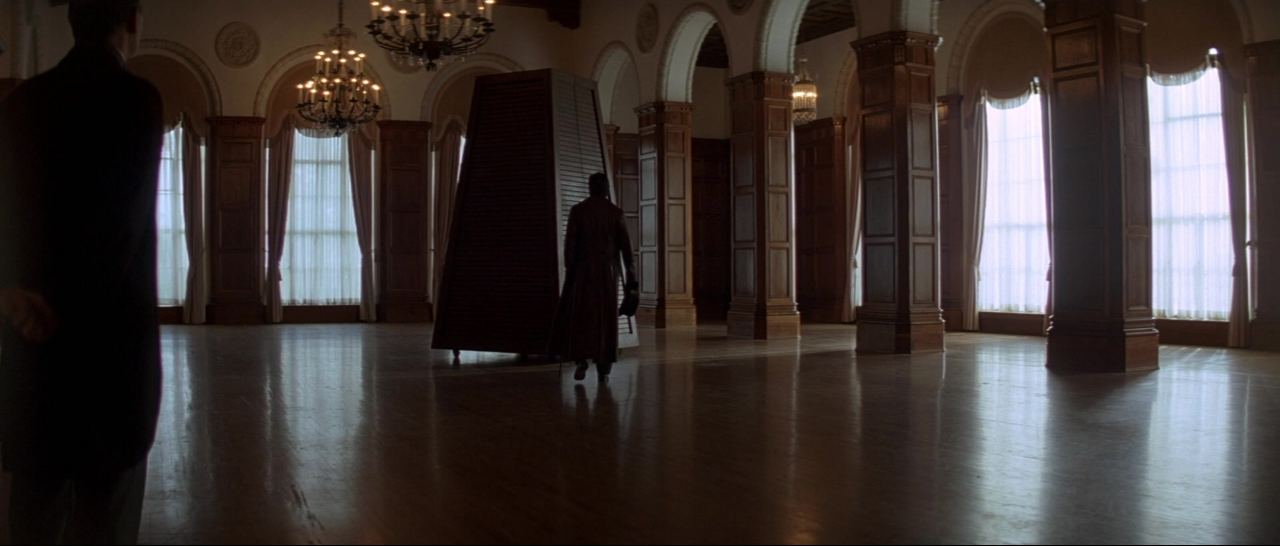
The environments in the film constantly reflect duality and illusion. Theaters, backstage corridors, hidden rooms, trap doors, mirrors, water tanks. Every location feels designed around secrecy and performance. Characters are constantly moving through spaces that conceal truth. London itself feels cold, industrial, and mechanical, which perfectly fits the film’s obsession with systems, engineering, and precision. Tesla’s sequences visually contrast this grounded industrial world beautifully. His environments feel isolated, mysterious, and almost supernatural, despite being rooted in science.
Cameras and Lensing
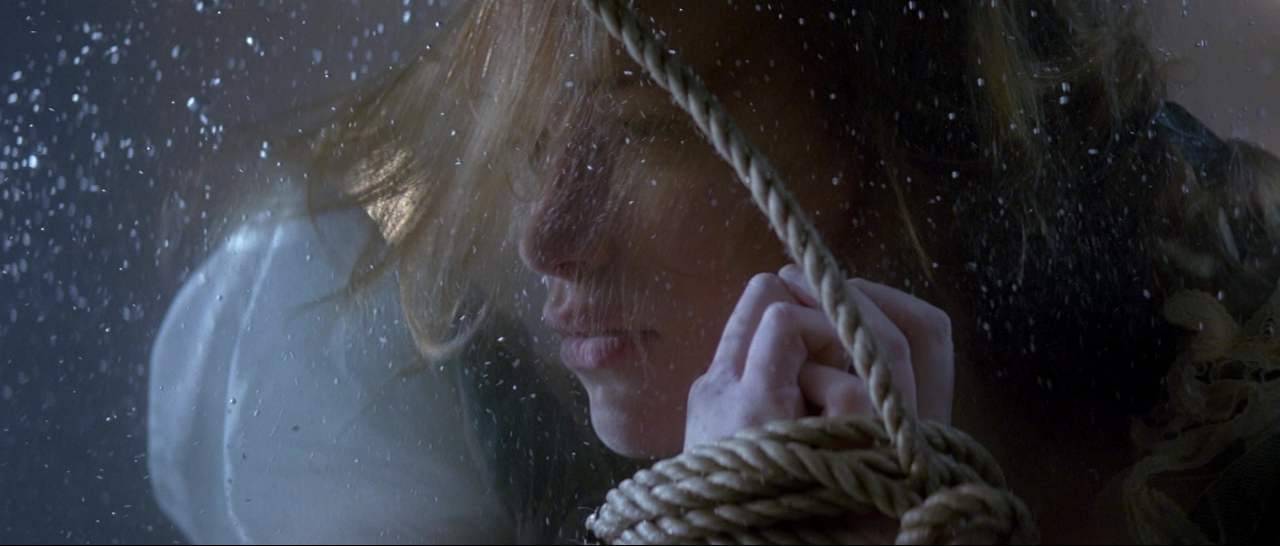
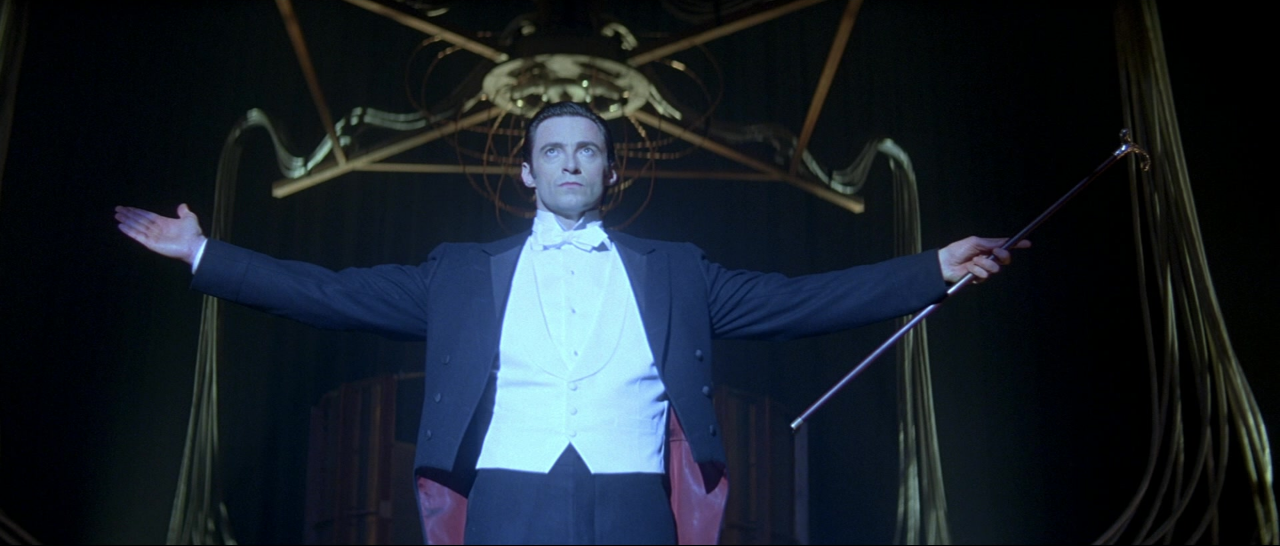
The film was shot on 35mm film by cinematographer Wally Pfister, one of Nolan’s greatest collaborators. Pfister uses relatively restrained camera work throughout much of the film, which is important because it allows the audience to focus on performance and structure rather than flashy cinematography. The lensing often uses medium focal lengths and controlled framing, creating intimacy while maintaining emotional distance. Characters are frequently framed through objects such as mirrors, glass, curtains, cages, and stage equipment, visually reinforcing the idea that everyone is performing a role. Close-ups are used strategically rather than constantly. When Nolan moves in close, it matters emotionally.
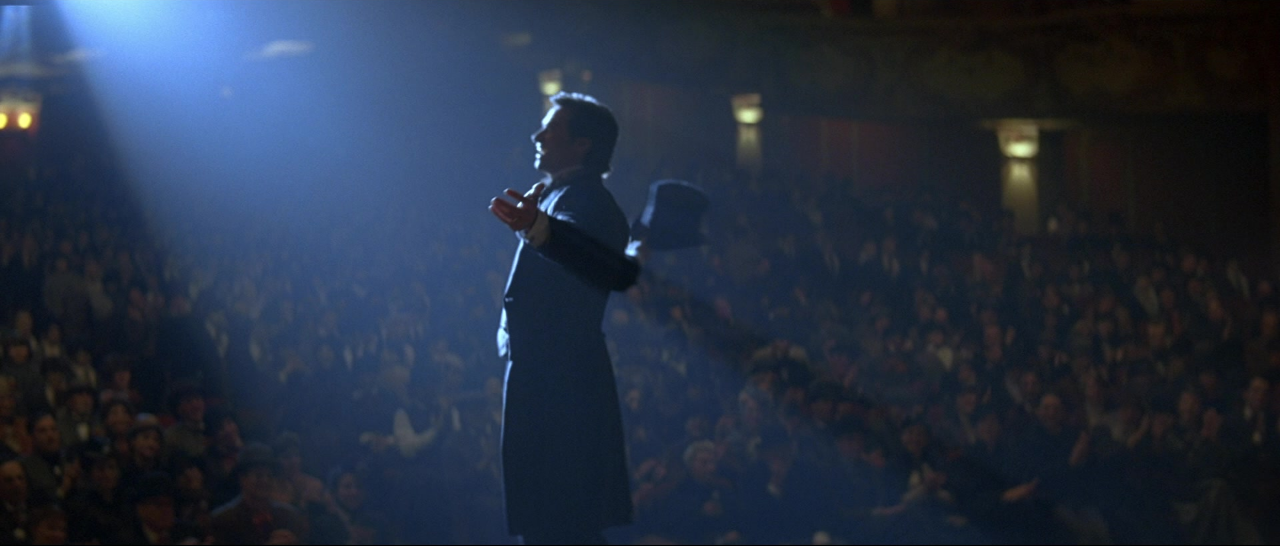
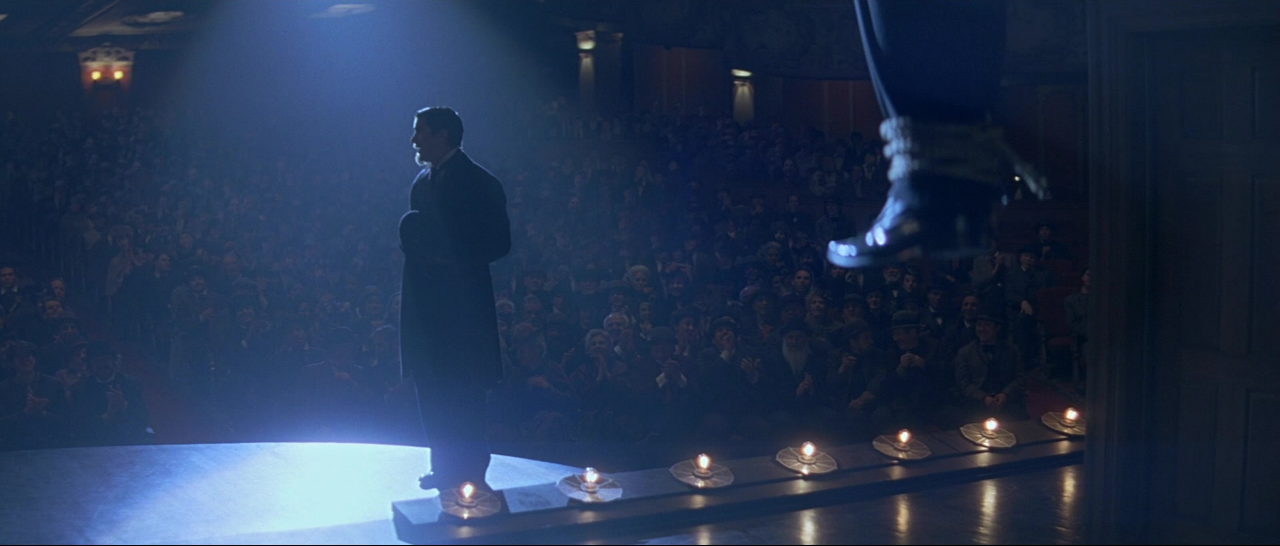
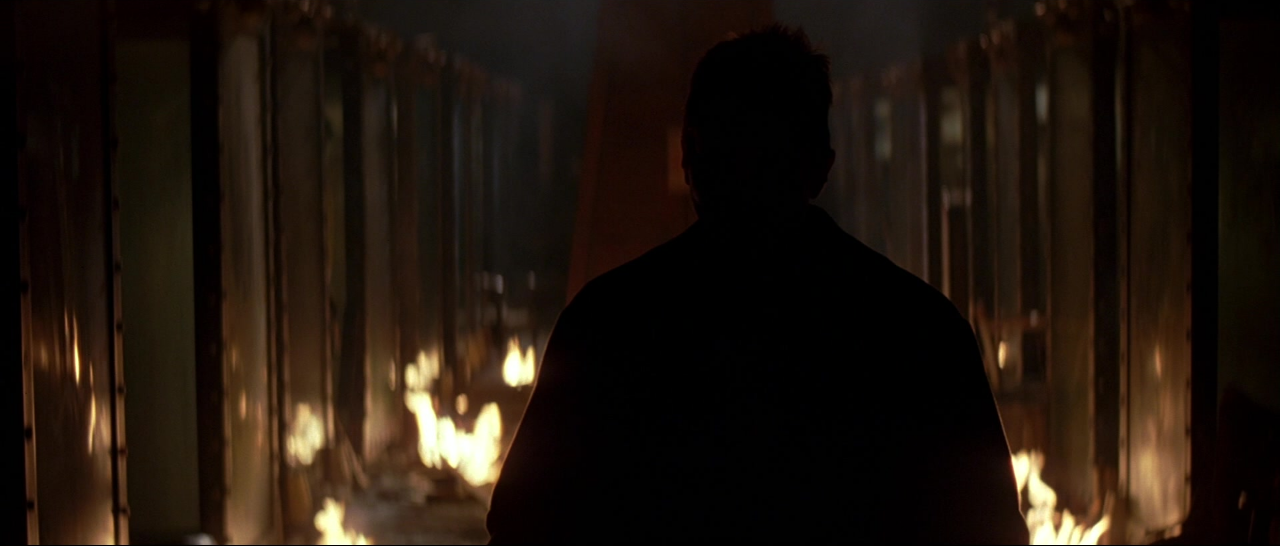
The lighting is stunning throughout. Warm candlelight and deep shadows create a world that feels theatrical and secretive. Faces are often partially obscured, visually reinforcing hidden truths and divided identities.
Aspect Ratio and Composition
The compositions are meticulous. Symmetry appears constantly throughout the film, reinforcing themes of doubles and mirrored identities. Characters are often framed opposite reflections or separated by objects within the frame. Even the blocking frequently mirrors itself between Borden and Angier. The visual storytelling quietly supports the narrative structure in almost every scene.
Lighting, Colour, and Texture
The colour palette leans heavily into warm ambers, dark browns, deep blacks, and golden stage lighting. It gives the film an old-world theatrical texture that feels timeless. The practical lighting from candles and stage lamps creates soft shadows that make the entire world feel mysterious and deceptive. There is a physical texture to the image that modern digital cinematography often lacks.
Consistency and Intent
This is one of the most visually disciplined films Nolan has made. Nothing feels excessive. Nothing feels random. Every visual choice supports the themes of illusion, duality, secrecy, and obsession. The cinematography never screams for attention, but it quietly strengthens every layer of the storytelling.
Emotional & Intellectual Impact
This film stayed in my head long after it ended. Not because I was trying to “figure it out,” but because of what it says about us as viewers. About our desire to be amazed. About how we often ignore obvious truths because we want something grander, more magical, more impossible. As a filmmaker, I found this deeply inspiring. As soon as I finished this viewing, I just opened up my notebook and writing down anything and everything that came in to my mind. I dont mean a script iim writing, I got to that after, but just all my thoughts about this film, about storytelling, about creativity and films, everything that I was thinking, I just wrote it all down because this film made me want to express myself! That is MAGIC! And after that, I opened up my Google Doc (....something that would likely disappoint Chris Nolan) and continued working on a script I am writing.
This film reminded me that great storytelling is not about hiding information. It is about controlling perspective, emotion, and attention. The trick is not the secret. The trick is making the audience look somewhere else.
Closing Thoughts
The Prestige is one of Christopher Nolan’s greatest achievements and one of the smartest films I have ever watched. The writing is genius. The performances are phenomenal. The direction is incredibly precise. The cinematography quietly reinforces every layer of the story. And the thematic depth is extraordinary. Most importantly, it is a film that respects the intelligence of its audience while simultaneously tricking them. That is real magic. A masterfully written and emotionally haunting film about obsession, sacrifice, and the illusion of mystery.
My Favourite Frames
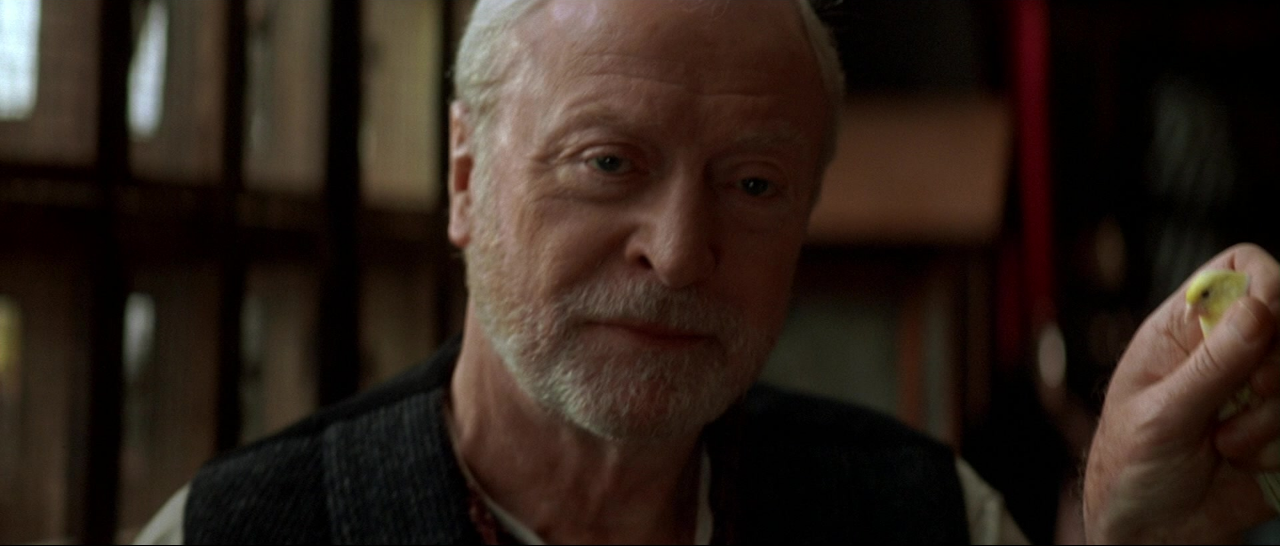
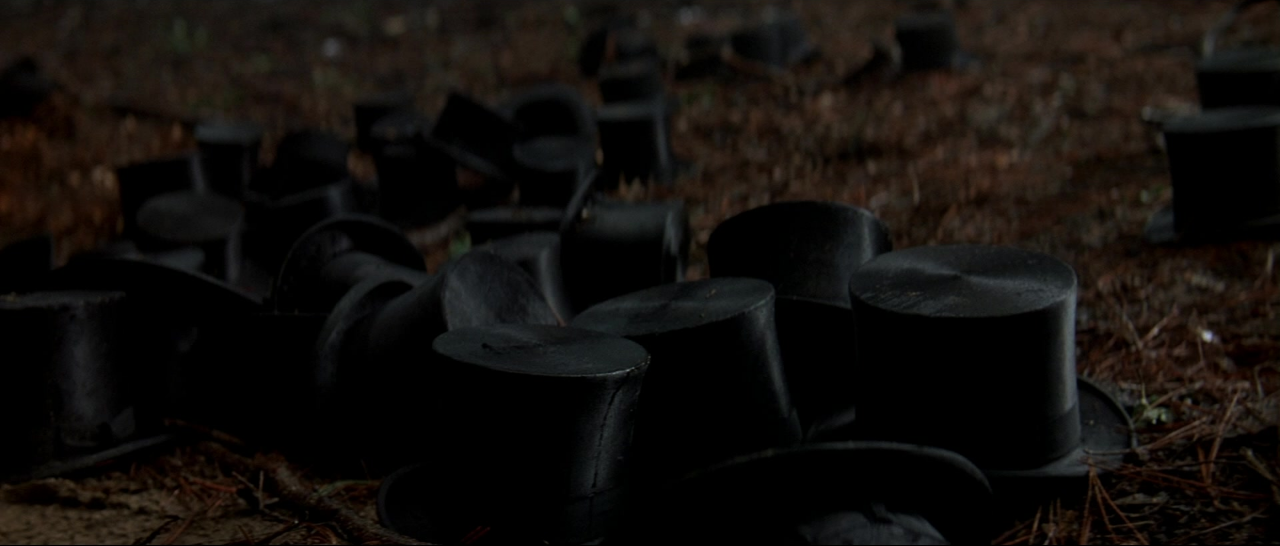
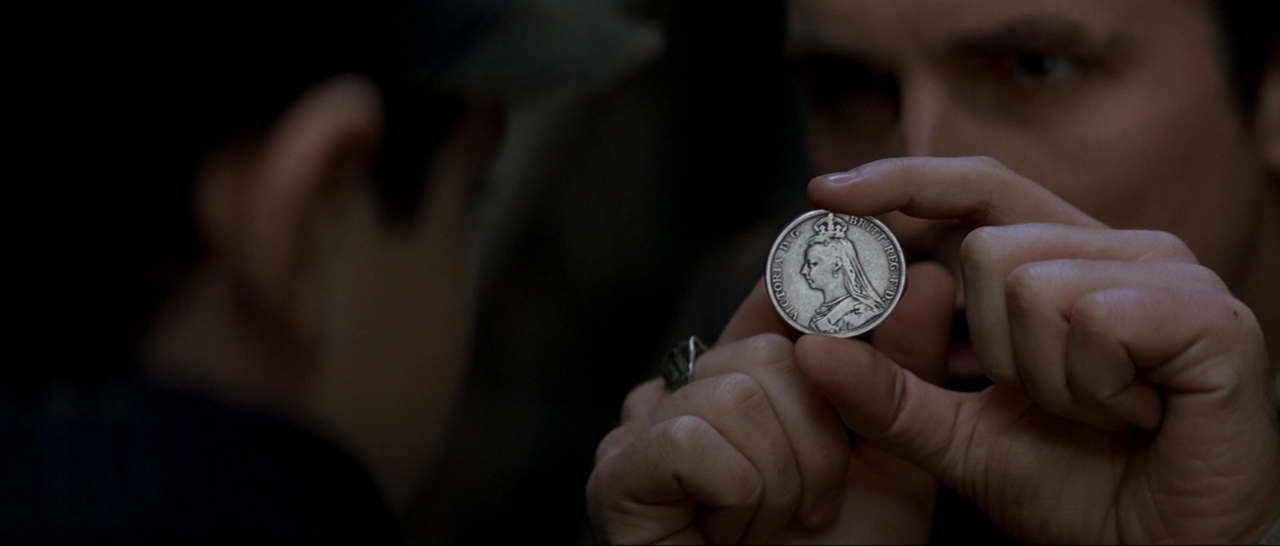

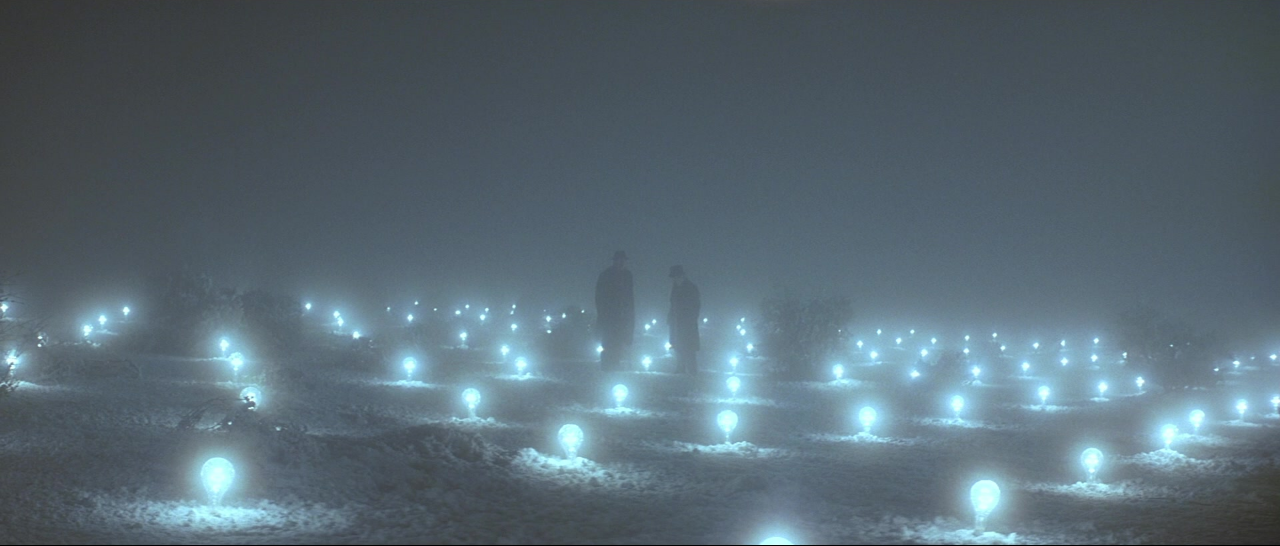






Old age should burn and rave at close of day;
Rage, rage against the dying of the light.” ❤️


