


First Man


First Man is one of the most emotionally grounded space films I’ve watched. Directed by Damien Chazelle and starring one of my absolutely favourite actors in Ryan Gosling as Neil Armstrong, this is not a film obsessed with the mythology and greatness of NASA or the glory of America planting a flag on the moon. This film and its director are far more interested in the man inside the astronaut suit. This film is about grief and the cost of greatness.And honestly, that is exactly why I connected with it so much. This film understands that behind one of humanity’s greatest achievements was a human being carrying grief, fear, pressure, and responsibility that most of us cannot even imagine. It is about the astronaut, yes. But it is equally about the husband, the father, and the quiet man trying to survive emotionally while carrying the expectations of the world.
Story & Themes
What I truly loved the most about First Man is how intimate it feels despite telling one of the biggest stories in human history. The film strips away the larger-than-life mythology around Neil Armstrong and instead presents him as just a human. While I am not personally too familiar with Neil Armstrong's real life personality, this version of Neil is quiet, emotionally reserved, and incredibly internal. He bottles up his pain, not because he is emotionless, but because he feels he has to remain stable for the people around him, especially his family. The emotional backbone of the story is not actually the moon landing. It is grief.
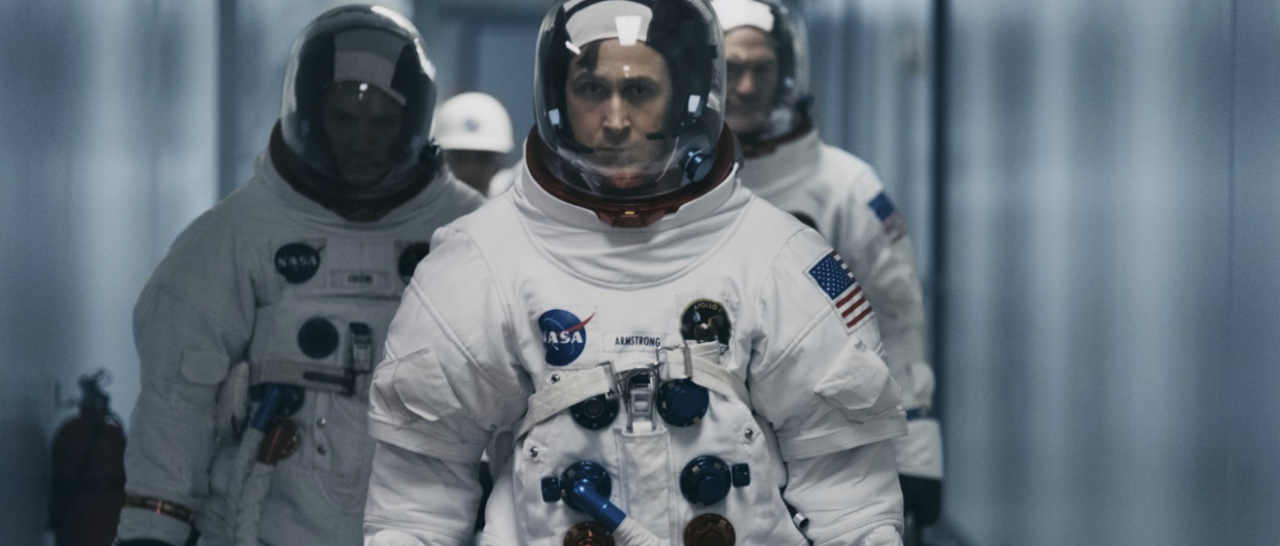
The death of Neil’s daughter hangs over the entire film like a shadow. Damien Chazelle smartly never allows us to forget that loss. Every mission, every silence, every risk Neil takes feels connected to it. It is almost as if he is constantly trying to outrun pain that he does not know how to process. What I also appreciated is that the film does not overly romanticise heroism. The astronauts are not treated like untouchable superheroes. They are shown as men inside terrifying metal machines that feel like they could fall apart at any second. That grounded approach makes the eventual moon landing feel earned rather than mythological.
Character & Performances
Ryan Gosling is incredible in this film (like anything he is in). I truly believe he is one of, if not the best actor working today when it comes to subtle emotional performance. Ryan Gosling has this ability to project enormous emotional weight through silence and stillness. I can't think of many actors who can do this convincingly. Many actors try to portray pain through loudness or visible breakdowns. Gosling often does the opposite. He becomes quieter. Slower. More withdrawn. And somehow that makes the pain feel even heavier.
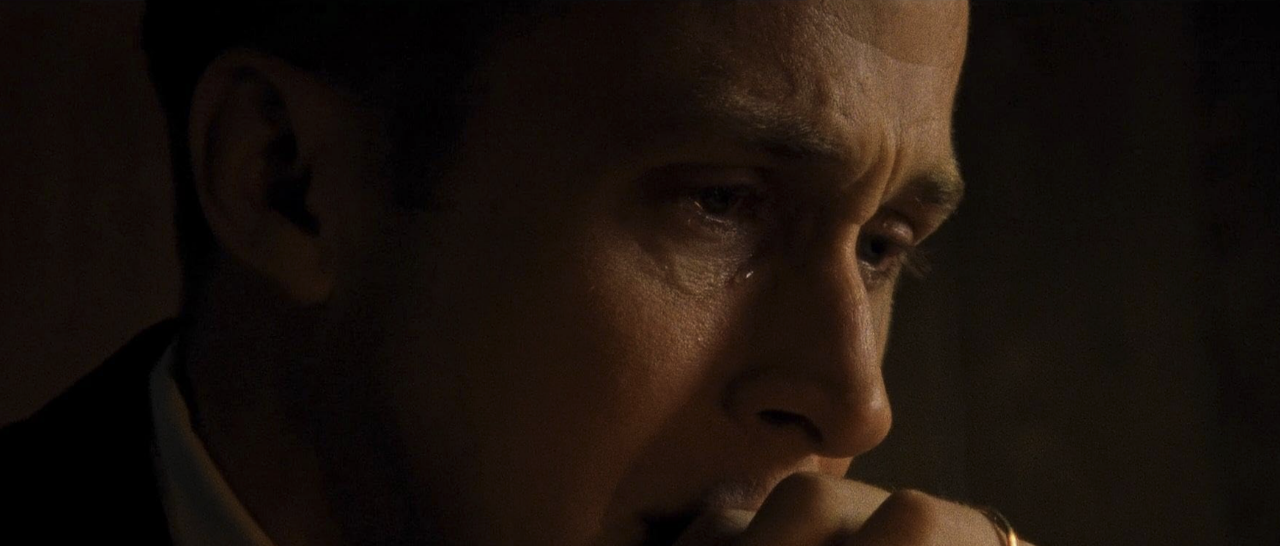
The funeral scene for Neil’s daughter is a perfect example. There is such a stillness to him physically, but his eyes are full of devastation. He barely moves. Barely speaks. Yet emotionally the scene says everything. Then later, when he quietly packs away items from his desk before sitting down and finally allowing himself to cry, the scene becomes heartbreaking precisely because of how restrained it is. Even in grief, Neil feels controlled. Not because he is unaffected, but because he does not know how to express what he is feeling externally. That is an incredibly difficult type of performance to pull off.
Claire Foy is equally fantastic as Janet Armstrong. In many ways, she becomes the emotional anchor of the film. While Neil is quiet, internal, and reserved, Janet carries strength and directness. She often feels like the emotional alpha in the relationship. The film does an excellent job of showing that Neil’s ability to keep moving forward emotionally comes largely from her support. Claire Foy plays her with intelligence, patience, frustration, and resilience all at once. Their dynamic feels authentic because the film allows both characters to carry emotional complexity.
Direction & Pacing
Damien Chazelle’s direction is exceptional here.
What makes the film work is his restraint. He avoids turning this into a loud Hollywood spectacle. Instead, he directs the story with patience and emotional intelligence. He understands that the emotional truth of the story matters more than the historical iconography. I do think parts of the late second act and early third act drag slightly. At times the pacing slows a little too much, and then ironically the Apollo mission itself feels slightly rushed considering the scale and impossibility of what is being achieved. I also thought that the Apollo mission’s duration and difficulty were not properly felt narratively. It felt more like a quick flight that happened and then they landed on the moon, rather than this painful travel through space and landing on the moon, something never done before.
But even with that criticism, Chazelle’s direction remains deeply impressive because of how immersive and emotionally grounded the film feels throughout.
Cinematography & Visual Storytelling
This film is visually stunning. But more importantly, the cinematography serves emotion and perspective rather than spectacle. Damien Chazelle and cinematographer Linus Sandgren constantly frame the story in a way that makes us feel the experience rather than simply observe it.
Use of Space and Environment
One of the smartest decisions in the film is how claustrophobic the spacecraft interiors feel. The ships are not presented as sleek futuristic marvels. They feel cramped, loud, mechanical, and terrifying. You feel every vibration. Every metallic creak. Every loose bolt.The environments constantly remind us how fragile these missions were. These astronauts are essentially being strapped into violently shaking metal cylinders and launched into the unknown. That physical realism adds so much tension to the film. And then when we finally arrive on the moon, the film completely shifts spatially. Suddenly everything becomes open, silent, and almost spiritual. After spending so much time trapped inside claustrophobic interiors, the openness of the lunar surface feels emotionally overwhelming.
Cameras and Lensing
The film was primarily shot on 16mm film, which gives the image an incredibly textured, grainy, almost documentary-like quality. That choice is brilliant because it makes the film feel tactile and historically grounded. It genuinely feels like you are watching footage from another era. Chazelle and Sandgren also used 35mm film for certain sequences, while the moon landing scenes were shot using IMAX 70mm cameras. The transition into IMAX during the lunar sequences is breathtaking. The image suddenly opens up visually and emotionally at the exact moment humanity steps onto another world. It is one of the best uses of IMAX I’ve seen because it is not just spectacle for the sake of spectacle. It has narrative purpose. Knowing what we know about the size, weight and noice-levels of the IMAX cameras, I was left baffled trying to workout how they shot some of those POV scenes. Did they tie of a giant IMAX camera on Ryan Gosling's head. Doubt it. It was masterful work.
The handheld cinematography throughout much of the film is another aspect I loved. I know some people dislike handheld because of the shakiness, but personally I love it when used properly. It creates immediacy and humanity. It feels raw and alive. There are also constant close-ups throughout the film, often using shallow depth of field to isolate Neil emotionally within the frame. The camera stays extremely close to faces, especially during moments of stress or silence. It creates intimacy while also reinforcing emotional isolation.
Aspect Ratio and Composition
The film smartly contrasts tight framing with large-scale imagery.
Inside the ships, frames are compressed and crowded. Characters are boxed in by machinery and confined spaces. Then during the moon landing, compositions suddenly become expansive and awe-inspiring. The contrast works beautifully because the film earns that visual release emotionally.
Lighting, Colour, and Texture
The colour palette is muted and naturalistic. Nothing feels overly polished or digitally clean. The grain from the film stock adds incredible texture throughout. Interior lighting often feels practical and harsh, reinforcing realism. Meanwhile the moon sequences become almost ethereal. The whites, blacks, and shadows on the lunar surface create some of the most beautiful imagery in modern space cinema.
Sound & Score
The sound design in this film is phenomenal. The metallic creaks inside the spacecraft are some of the most effective sound choices in the entire movie. They constantly remind you how dangerous these missions were. The ships sound like they are barely holding together. The contrast between sound and silence is also masterfully handled. Especially during the moon sequences, where silence becomes almost spiritual. Justin Hurwitz delivers a beautiful score that feels melancholic, intimate, and reflective rather than overly triumphant. It perfectly matches the emotional tone of the film.
Emotional & Intellectual Impact
By the end of the film, what stayed with me was not the achievement of landing on the moon. It was the loneliness. The silence. The emotional weight that Neil Armstrong carried internally while the world projected greatness onto him externally. This film understands that extraordinary people are still human beings underneath their accomplishments. And I think that is what makes it resonate emotionally.As a filmmaker myself, I also found the film incredibly inspiring technically. The use of handheld cameras, film stock, close-ups, practical lighting, and immersive sound design all reminded me how powerful grounded filmmaking can be.
Closing Thoughts
First Man is a beautiful, emotionally intelligent space film that focuses less on history-making and more on humanity.Ryan Gosling delivers one of his best performances through pure subtlety and emotional restraint. Claire Foy is outstanding. Damien Chazelle directs with maturity and confidence. And visually, the film is breathtaking. It may drag slightly in parts, and the Apollo mission itself could have carried more narrative weight, but overall thi s is still one of the most grounded and emotionally powerful astronaut films ever made. A visually stunning and deeply human story about grief, silence, and the cost of greatness.
My Favourite Frames







Old age should burn and rave at close of day;
Rage, rage against the dying of the light.” ❤️


