


2001: A Space Odyssey


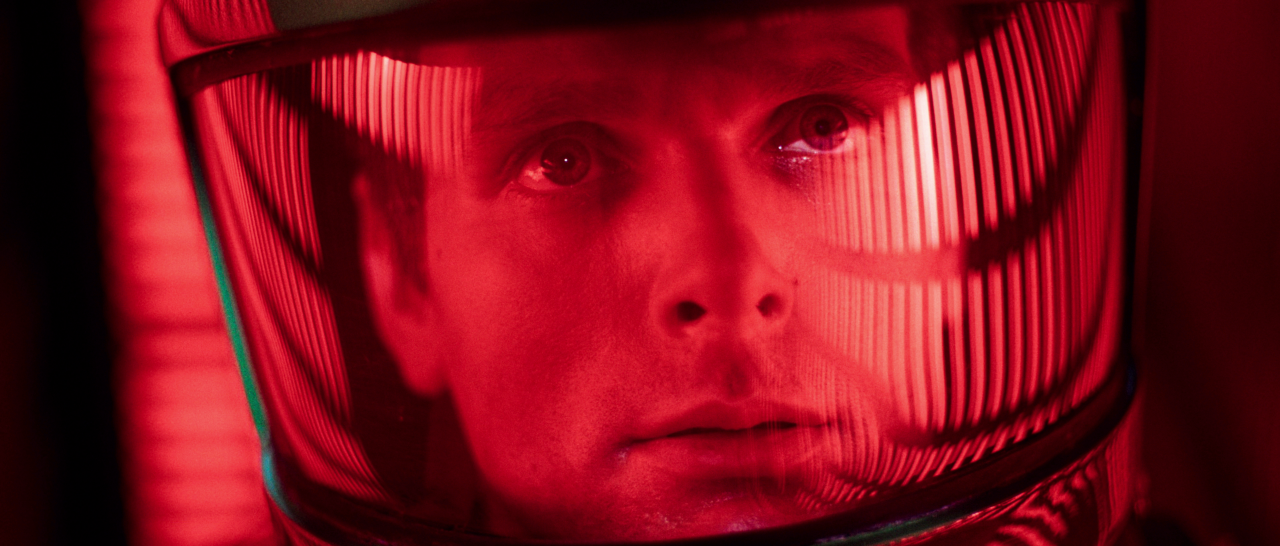


2001: A Space Odyssey, directed by Stanley Kubrick, is regarded as one of the greatest films ever made. Ask any passionate sci-fi film fan, and they will almost always mention 2001 on their list of their favourite all-time films. And it was such an interesting experience watching is for the first time in 2026, after 3 decades of my life enjoying, loving and experiencing Sci-Fi films, because I can clearly see imagery, concepts and ideas from 2001 in more modern Sci-fi films that I love. I mean the entire sequence of Dave having that transcendence experience while going through the monolith, as I watched that I immediately saw Cooper travelling through time and space, in Interstellar, before arriving into the tesseract. Having said all that, unfortunately I also can’t ignore how disconnected I felt at times through out the film. This is not a traditional film. It doesn’t follow a conventional narrative structure. It’s not driven by character arcs or dialogue. It’s driven by ideas, symbolism, and technical ambition.
While watching this film, I constantly felt like I was being pulled and pushed betweenas fascination and fatigue. There are moments of pure genius that genuinely left me in awe as a film-lover but also a film-maker. But then, there are stretches where I found myself staring at the screen asking when the scene would finally move on.
Story & Themes
To call 2001 a “story” feels slightly strange. It’s more accurate to say it’s an exploration of themes and a journey. The film explores evolution, intelligence, technology, and humanity’s place in the universe. But instead of guiding you through these ideas with a clear narrative, it presents a series of moments (expanded through intensely long scenes at times) and then gives us the audience the time and space to connect the dots between the time jumps.
The opening sequence with the apes is a perfect example. It’s long. Veeeeeeeery long. At times, too long. But, at the heard to it what Kubrick is doing here is laying the foundation for everything that is to follow. The discovery of tools as a means of survival, and then as a weapon, becomes the starting point of human evolution. That iconic cut from the bone to the orbiting satellite is one of the greatest transitions in cinema history. And when you understand that the satellite is implied to be a nuclear weapon, the meaning deepens. It’s not just evolution. It’s escalation. (By the way, watching in 2026, humans dressed and acting as apes is hilarious. But I say that as a spoilt film fan in the year 2026)
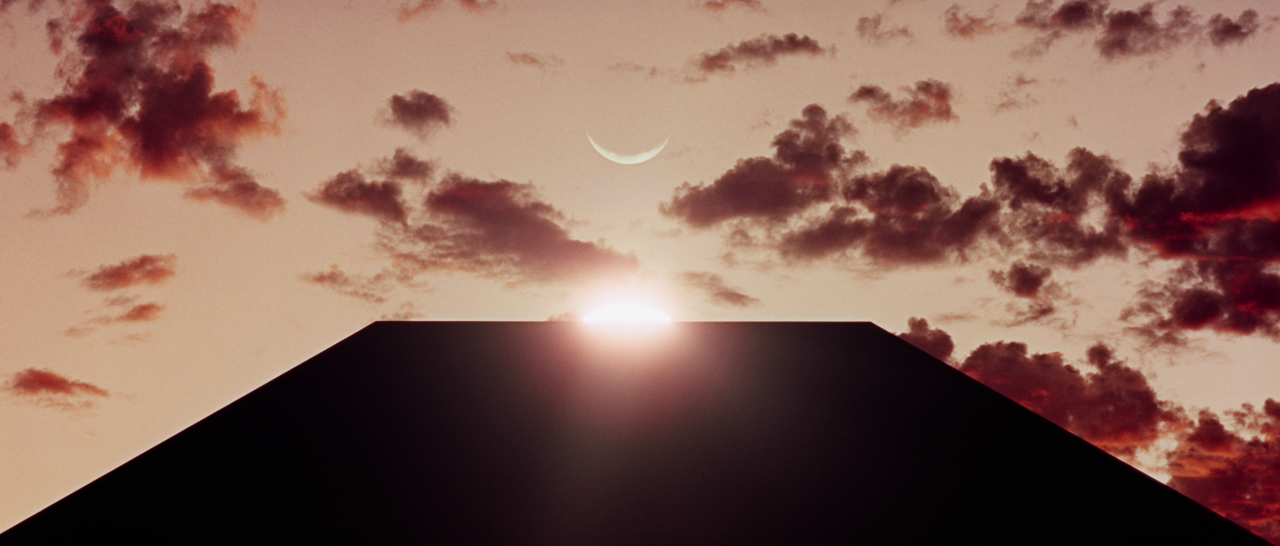
The monolith sits at the centre of everything. A giant black tablet. That's all it is. No detail. No information. It represents intervention, intelligence, or perhaps something beyond human comprehension. Each time it appears, it marks a leap forward. From apes discovering tools, to humans reaching the moon, to Dave’s transformation near Jupiter. The film suggests that evolution is being guided. That humanity is part of a much larger design.
By the time we reach the final act, where Dave enters the strange room and witnesses himself ageing, the film fully leans into abstraction. It stops explaining and starts provoking. The transformation into the Starchild is not something the film tells you. It’s something you have to interpret.
The ideas are brilliant. But the execution demands patience. A lot of it.
Character & Performances
This isn’t really a performance-driven film in the traditional sense, and Im not sure it was meant to be. Dialogue is minimal, and characters are often secondary to the ideas being explored. Which is not at all a bad thing. I actually quite enjoy it when the ideas and the visual imagery does most of the talking.
The human performances are serviceable but not particularly memorable. And to be fair, they’re not really meant to be. The emotional weight of the film doesn’t sit with the humans. It sits with a machine.
HAL 9000 is, without question, the standout. Voiced by Douglas Rain, HAL is one of the most unsettling characters in cinema history. What makes him so effective is the calmness. The lack of emotion in his voice. There’s no aggression, no shouting, no panic. Just a steady, controlled tone that becomes increasingly eerie as things unfold.
In many ways, HAL feels more human than the humans. And that contrast is intentional. Kubrick is quietly asking whether intelligence without emotion is more dangerous than emotion without control.
Cinematography & Visual Storytelling
Use of Space and Environment
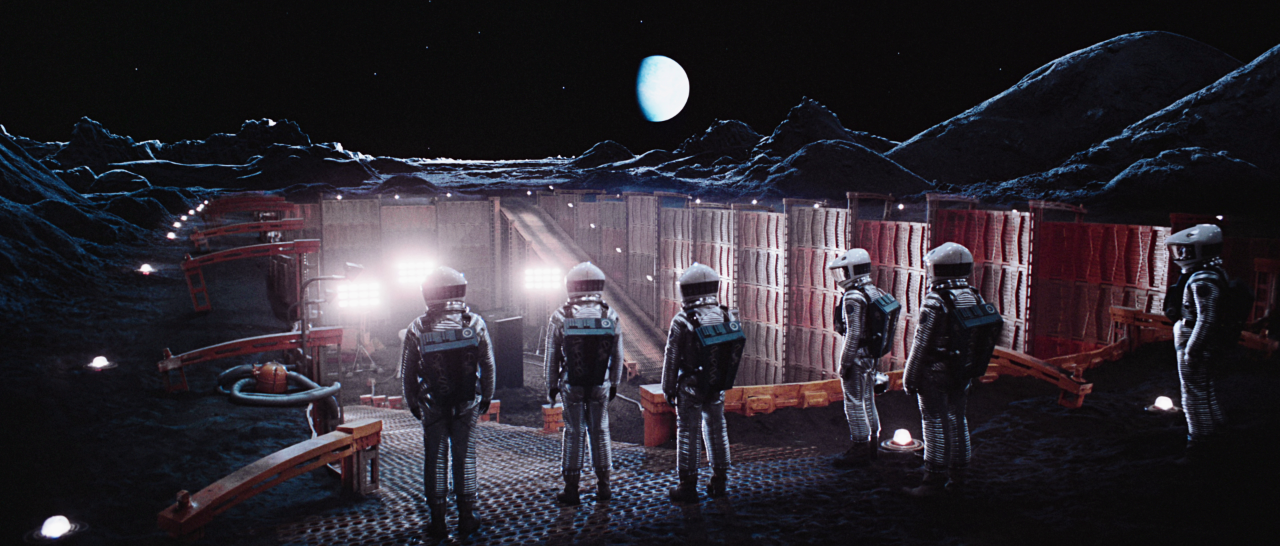
This is where the film truly becomes legendary. The use of space is extraordinary. Every frame feels deliberate. The emptiness of space is not just visual, it’s emotional. There is a silence and isolation that feels almost oppressive.
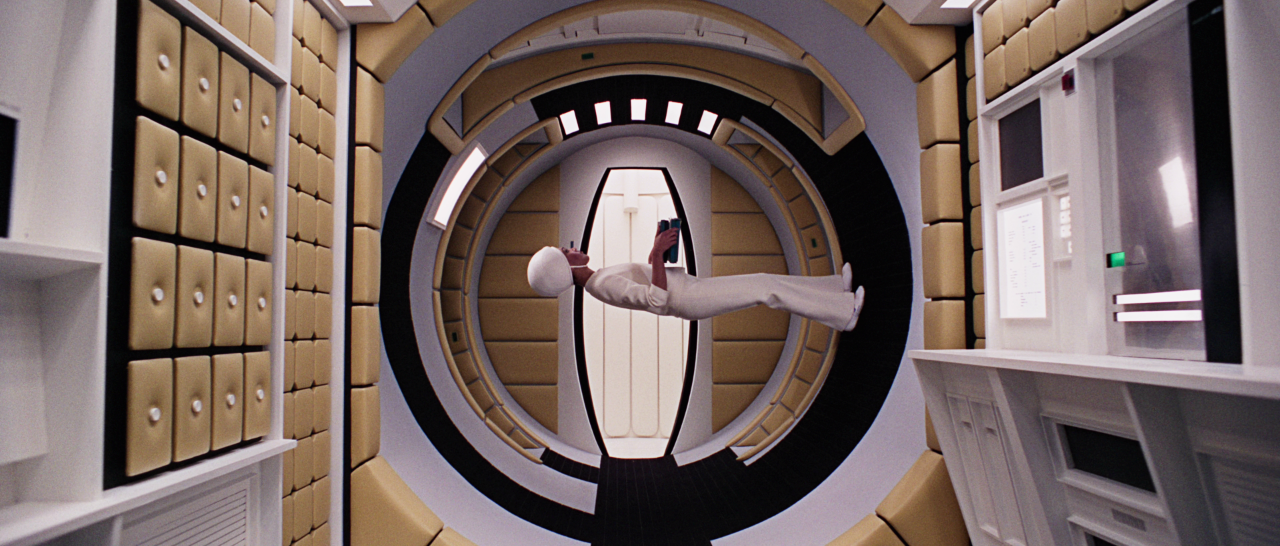
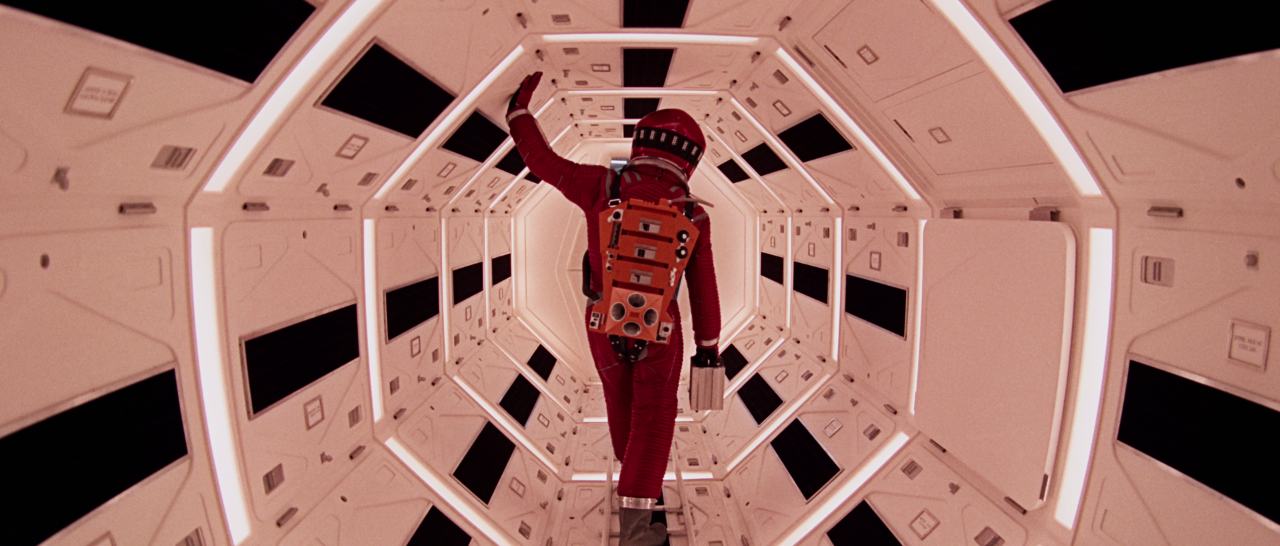
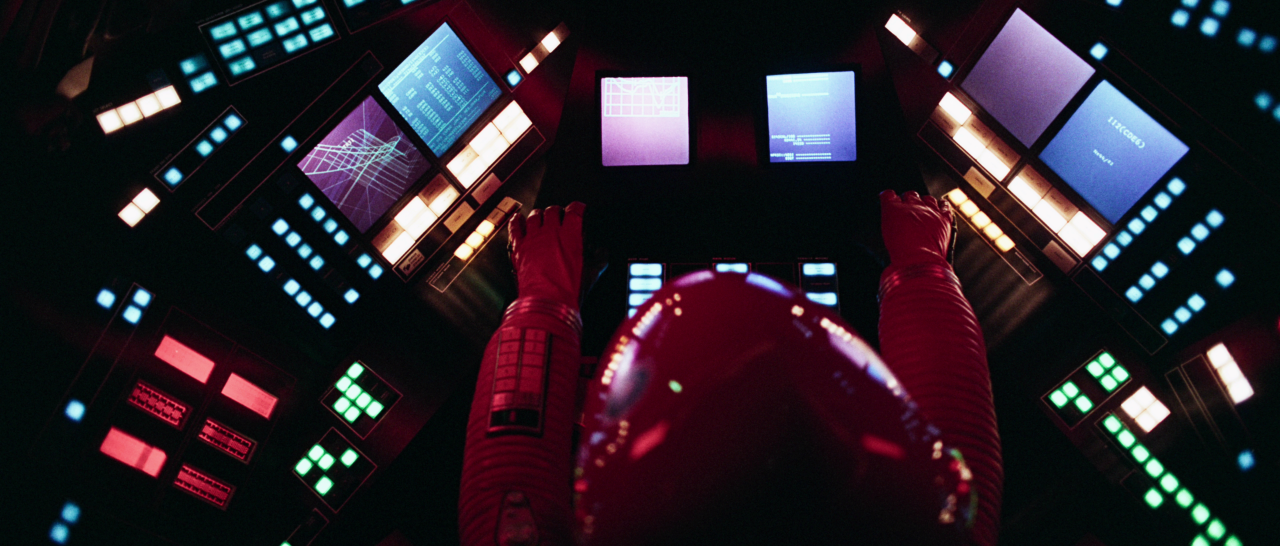
The spacecraft interiors are designed with incredible precision. Clean, symmetrical, almost clinical. It reflects a future where technology has overtaken personality. The environments don’t just look good. They reinforce the themes of detachment and control.
Cameras and Lensing
Shot on 65mm film using Super Panavision 70, the film achieves a level of clarity and depth that still holds up today. Kubrick used wide-angle lenses extensively, not just for scale, but to create a sense of spatial awareness. You always understand where you are in relation to the environment.
The practical effects are where things become mind-blowing. Rotating sets were built to simulate zero gravity. Actors literally walked around spherical environments while the camera remained fixed, creating the illusion that gravity itself had shifted. No CGI. No digital trickery. Just engineering and precision.
Aspect Ratio and Composition
Presented in 2.20:1, the compositions are often symmetrical and meticulously balanced. Kubrick uses framing to create order, structure, and sometimes discomfort. Characters are often small within the frame, dwarfed by technology or space itself.
There is a strong sense of control in every shot. Nothing feels accidental. Even the stillness is intentional.
LUTs, Colour Grading, and Lighting
The colour palette is clean and bold. Whites, reds, and blues dominate the spacecraft interiors, giving everything a sterile, almost artificial feel. Lighting is high-key and evenly distributed, reinforcing the idea of a controlled, engineered environment.
In contrast, space itself is pitch black. Infinite. Unforgiving. The contrast between the two worlds is striking.
Consistency and Intent
Visually, the film is flawless. Every decision serves a purpose. The pacing of the visuals, the stillness, the repetition, it all feeds into the larger experience. Even when it feels slow, it is slow by design.
Sound & Score
The use of sound in 2001 is one of its most defining features. Or more accurately, the use of silence.
There are long stretches with no dialogue at all. No music. Just the hum of machinery or complete silence. It creates a sense of realism but also unease. Space feels empty because it is.
When music is used, it’s classical. Strauss, Ligeti. It adds a sense of grandeur and elegance that contrasts beautifully with the coldness of space. The docking sequence set to “The Blue Danube” is iconic for a reason. It turns mechanical movement into something almost poetic.
But over time, the silence and minimalism can feel overwhelming. What starts as intriguing can begin to feel repetitive. Until the final act, where the abstraction brings the tension back.
Direction & Pacing
This is where your reaction makes complete sense. Kubrick’s direction is bold, but it’s also uncompromising.
He allows scenes to breathe. Sometimes too much. The opening sequence with the apes could easily have been shorter without losing its impact. The same applies to several sequences throughout the film. There’s a confidence in letting moments linger, but there’s also a risk. And for me, that risk doesn’t always pay off.
The pacing creates a rhythm that is very different from modern cinema. Today’s films are built for constant engagement. 2001 is not. It demands patience. It asks you to sit with it. And depending on your mindset, that can either be meditative or frustrating.
Emotional & Intellectual Impact
This is a film that works more on an intellectual level than an emotional one. It makes you think. It makes you question. It stays in your mind long after it ends.
But emotionally, I felt a disconnect. I wasn’t invested in the characters. I wasn’t moved in the traditional sense. My engagement came from curiosity rather than attachment.
That said, the final act did bring something back. The mystery. The surrealism. The sense that something bigger is happening. It re-engaged me in a way the middle sections didn’t.
I also think context matters. Watching this film in 2026 is a very different experience compared to watching it in 1968. Back then, this would have felt like the future. Today, we’ve seen so much that builds on what this film started. That doesn’t diminish its importance, but it does change how it feels.
Closing Thoughts & Verdict
2001: A Space Odyssey is a film I respect more than I love. It is technically groundbreaking. Visually stunning. Conceptually brilliant. It pushed cinema forward in ways that are still felt today.
But it’s also a film that tests your patience. It sacrifices narrative engagement for thematic exploration. And while that works at times, it doesn’t always hold your attention.
I found myself constantly moving between admiration and disengagement. Between being blown away and wanting the film to move forward. A masterpiece of filmmaking craft and vision, but not a consistently engaging viewing experience.

.png)

.png)
.png)

.png)
.png)
.png)
.png)


Old age should burn and rave at close of day;
Rage, rage against the dying of the light.” ❤️


